


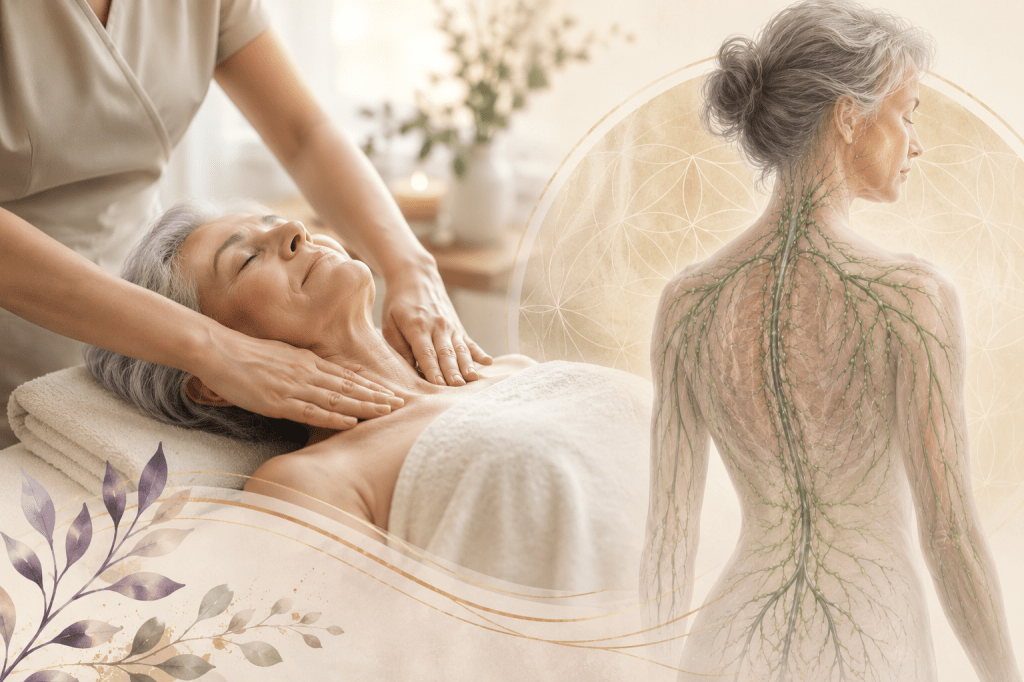
Why lymph drainage massage becomes more important in midlife and later life
As we move through midlife and into our later years, our bodies naturally change. We may become less active, spend more time sitting, experience hormonal changes, or find that movement and exercise are not as easy as they once were.
One system that can be affected by reduced movement is the lymphatic system — an important part of the body’s immune and fluid-management network.
Unlike the cardiovascular system, the lymphatic system doesn’t have a central pump like the heart. It relies heavily on muscle movement, breathing and body motion to help move lymph fluid through the body. This is one reason gentle lymph drainage massage can be particularly supportive for people who are less active or less mobile.
Supporting healthy fluid movement
Lymph carries excess fluid, proteins and cellular waste away from tissues and eventually returns fluid to the bloodstream. When we are moving regularly, muscle contractions help encourage this flow.
When movement decreases, fluid can sometimes accumulate in the tissues, particularly around the ankles, legs, hands or arms. Gentle lymphatic massage uses light, rhythmic techniques designed to encourage the natural movement of lymph.
For older adults or anyone spending long periods sitting or resting, this can be a lovely way to complement everyday movement.
Midlife brings its own changes
For women in midlife, hormonal changes can also influence how the body feels. Many women notice changes in fluid balance, feelings of puffiness, heaviness, inflammation and recovery.
Lymph drainage massage isn’t a treatment for menopause itself, but it can be a relaxing complementary therapy that supports circulation, fluid movement and overall wellbeing while encouraging the body to slow down and rest.
Particularly valuable when mobility is limited
For someone who walks less, exercises less, spends much of the day sitting, or has limited mobility, regular gentle massage can provide some of the movement stimulus the body is missing.
It may help support:
- Healthy movement of lymph fluid
- A feeling of lighter, less heavy limbs
- Relaxation and stress reduction
- General circulation and body awareness
- Comfortable movement and mobility
- Recovery after periods of inactivity
The goal isn’t to force the lymph to move. Lymphatic massage should be gentle, rhythmic and adapted to the individual.
A simple form of self-care
Perhaps one of the greatest benefits is that lymph drainage massage creates a reason to pause.
As we get older, wellbeing isn’t only about doing more. It’s also about supporting the body’s natural processes, maintaining mobility where possible, resting well and giving ourselves regular opportunities to receive care.
For people who are active, lymphatic massage can be a wonderful addition to their wellness routine. For those who are less mobile, it can become an especially valuable form of gentle bodywork.
Your body doesn’t stop needing movement because you are getting older. It needs a little more support to keep things flowing.
*If you have unexplained or sudden swelling, particularly swelling in one limb, pain, redness, warmth, shortness of breath, heart or kidney problems, active infection, or a history of blood clots, seek medical advice before having lymphatic massage. Lymphatic massage should be appropriately adapted for older adults and people with medical conditions.

Leave a Reply