


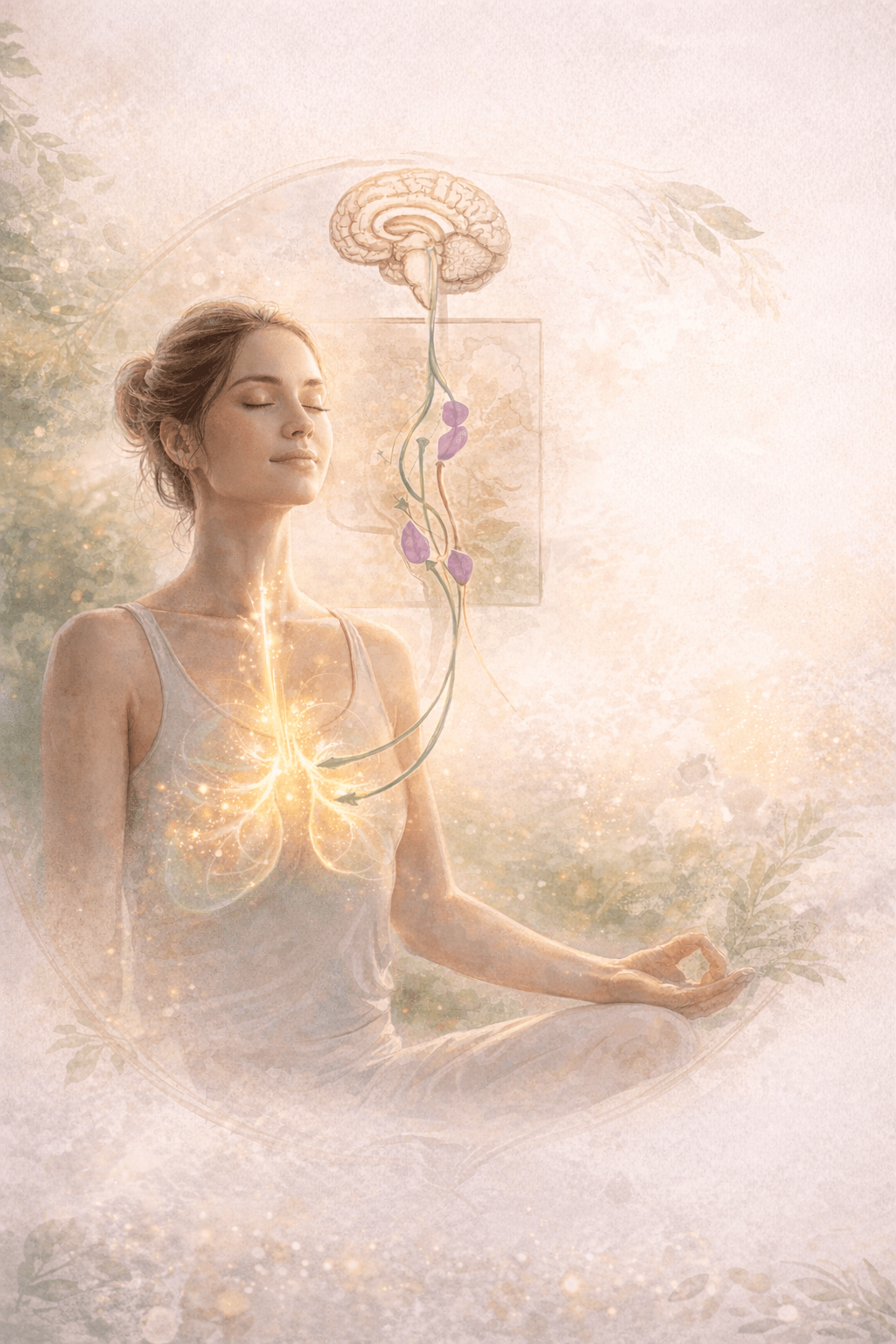
Why conscious breath work matters
Feeling stressed, anxious, exhausted, or just off?
You’re not alone.
If your mind feels busy, your sleep is restless, your energy is low, or your body seems stuck in constant overdrive, there’s a simple practice that can shift everything — quickly and naturally.
And the best part?
It’s free, gentle, and can be done anywhere.
The missing piece: your breath
Most people don’t realise this, but how you breathe directly controls your energy levels, anxiety, sleep, and mental clarity. When breathing becomes shallow or dysfunctional (which happens easily during stress), your nervous system stays locked in survival mode.
The good news?
You can reset this — often in as little as 10 minutes a day.
What conscious breathwork can do for you
With the right technique, breathwork helps to:
- Instantly calm an overactive nervous system
- Increase energy by improving oxygen delivery to your cells
- Reduce anxiety and mental overwhelm
- Clear brain fog and improve focus
- Support deep, restorative sleep
- Supports lymphatic drainage
- Help your body return to balance — naturally
Why this works so powerfully
Your breath is directly linked to:
- Your nervous system
- Your brain chemistry
- Your mitochondria (your body’s energy generators)
- Your lymphatic system
When breathing patterns are corrected, your body receives the signal that it is safe. Stress hormones decrease, oxygen efficiency improves, and energy production switches back on.
This isn’t about forcing the breath or doing something extreme.
It’s about teaching your body how to breathe the way it was designed to.
A small daily practice- profound shifts
In this breathwork practice, you’ll learn:
- A simple 10-minute daily routine to boost energy naturally
- Why dysfunctional breathing causes fatigue, anxiety, and poor sleep and sluggish lymph.
- How to calm anxiety at its root — in the body, not just the mind
- How to rewire your nervous system out of constant stress mode
- Techniques that support deep, child-like sleep
- The key breathing habits that create long-term balance and vitality
A small daily practice. A profound shift.
When you change the way you breathe, you change how your body experiences life.
More energy.
Less anxiety.
Clearer thinking.
Deeper rest.
Sometimes the most powerful transformation begins with something as simple as your next breath.
Research shows that specific breathing practices can both calm anxiety and increase oxygen delivery to your body’s cells — improving energy, focus, and overall well-being through deliberate regulation of breath patterns.
How breathing directly supports the Lymphatic System
Unlike the circulatory system, the lymphatic system has no pump.
It relies almost entirely on movement and breath to function effectively.
This means how you breathe determines how well your body detoxifies, reduces inflammation, and maintains immune balance.
The diaphragm: your hidden lymph pump
Deep, slow breathing activates the diaphragm, a dome-shaped muscle that sits between the lungs and abdomen.
When you inhale deeply:
- The diaphragm moves downward
- Pressure changes occur in the chest and abdomen
- This pressure gently pulls lymph fluid upward, helping it circulate
When you exhale slowly:
- The diaphragm relaxes upward
- Lymph fluid is encouraged to drain and move through lymph vessels and nodes
This rhythmic pressure change acts like a natural internal pump for lymph flow.
Why shallow breathing blocks lymph flow
When breathing is shallow or restricted (common during stress):
- The diaphragm barely moves
- Lymph stagnates, especially in the chest, neck, and abdomen
- Toxins, metabolic waste, and inflammatory by-products accumulate
- Swelling, fatigue, brain fog, and immune stress increase
Over time, poor lymph movement contributes to that heavy, sluggish, “off” feeling many people experience.
Breath, nervous system, and lymph work together
Conscious breathing also activates the parasympathetic nervous system, signalling safety to the body.
When the nervous system shifts out of survival mode:
- Lymph vessels relax and open
- Fluid movement improves
- Inflammation reduces
- Immune regulation becomes more efficient
This is why breathwork is such a powerful foundational detox and healing tool.
The energy connection
The lymphatic system plays a key role in clearing cellular waste.
When lymph flow improves:
- Cells function more efficiently
- Oxygen delivery improves
- Mitochondria (energy producers) work better
- Energy levels rise naturally — without stimulation or force
In simple terms
Breath does three vital things at once:
- Pumps lymph fluid
- Calms the nervous system
- Improves oxygen and nutrient delivery to cells
This is why even 10 minutes of conscious, diaphragmatic breathing daily can:
- Reduce anxiety
- Decrease inflammation
- Support detox pathways
- Increase vitality and mental clarity

Lets get to it – the 10 minute a day practice
1. Diaphragmatic (Deep Belly) Breathing 3 minutes
This is one of the most studied and effective techniques for anxiety reduction and increasing oxygen efficiency. It involves slow, deep inhalations into the belly rather than shallow chest breathing.
Benefits:
- Strengthens the diaphragm and increases lung capacity
- Slows breathing rate, which reduces stress hormones and calms the nervous system
- Helps deliver oxygen more effectively throughout the body
How to do it:
• Sit or lie comfortably
• Breathe in through your nose, letting your abdomen expand
• Exhale slowly through your mouth
Experts note this type of breathing helps decrease breathing effort and supports full oxygen exchange — which can improve energy and calmness.
2. Box Breathing (Equal-Pattern Breath) 3 minutes
This technique uses a balanced rhythm of inhale–hold–exhale–hold (often 4-4-4-4 counts).
Why it works:
- Regulates the autonomic nervous system by engaging the vagus nerve
- Promotes a calm, focused state of mind
- Makes breathing more deliberate and efficient
Many military and performance coaches use this method for steady focus under pressure.
3. Extended Exhale Techniques (e.g., 4-7-8) 4 minutes
Techniques that lengthen the exhalation more than the inhalation activate the parasympathetic (“rest and digest”) nervous system, which calms anxiety and lowers heart rate.
A well-known example is the 4-7-8 breath: inhale for 4 sec, hold for 7 sec, and exhale for 8 sec.
This pattern shifts your physiology into relaxation mode, helping with anxiety and sleep preparation.
PS. Slow, Controlled Breathing (~6–8 Breaths/Min)
Simply slowing your breath rate to around 6–8 breaths per minute (such as inhaling 4–5 seconds and exhaling 4–5 seconds) has strong support in research for reducing “fight-or-flight” nervous system activation and improving stress resilience.
Slower breath rates are linked to better heart rate variability — a key marker of calm and balance — and improved mental clarity.
How These Practices Impact Your Body
Activate the parasympathetic nervous system — the system responsible for rest, digestion, and calm — reducing stress and anxiety.
Improve oxygenation — deeper breaths increase fresh air intake and improve overall oxygen delivery to your cells and brain.
Lower respiratory rate — slower breathing helps your body use oxygen more efficiently and reduce “wasted” breath.
Supports lymph – relaxes nodes, pumps fluid, improves immune system
Putting It All Together (Daily Practice Example)
Daily 10-Minute Routine
- Diaphragmatic breathing: 3 minutes — slow, deep belly breaths
- Box breathing: 3 minutes — inhale/hold/exhale/hold for equal counts
- Extended exhale practice: 4-7-8 breaths for 4 minutes
Even a short daily practice like this can reliably reduce anxiety, deepen oxygen use, supports the immune system and boost energy levels over time.

Leave a comment